
I have been busy with a new online jewelry business at magicbeadstore.com, featuring gemstone jewelry handmade by my artist sister-in-law, Kitty. Here is my brief commercial!


Now that the site is up and running, I have a little more time, and I know a lot more (not enough though) about social media with its many possibilities.
In the meantime, I have had five poems accepted. The first two, “Weather” and “Walking,” appear in the recent issue of The Atlanta Review.
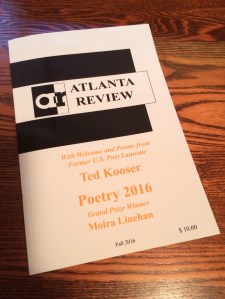
Two more will appear in Alembic sometime soon, and the fifth, which is about my dear eight-year old friend, Eleanore (see her photo below), will be in the Broad River Review later this year. Also, of the many rejection notices, I received a few “redemptive” ones that had compliments or encouragement from the editors (see earlier blog post about redemptive rejections by clicking here.)
I am still thinking about the elegy as a poetic form. Prone to hero worship, I become enamored of writers who articulate things that I feel but have not been able to say. It is not unusual then that I am in love with Roland Barthes, who died in Paris in 1980, and who was gay, so I’m 0 for 2, no chance of reciprocity. But I am in love with the writing persona who engages me with thoughts that provoke and transcend my own. In my youth (college), I was beguiled by James Joyce. When my husband and I were dating, he was interested in Samuel Beckett, to whom Joyce dictated much of Finnegan’s Wake. We stayed up late at his house, sometimes all night, discussing the two of them, though my mother never believed that was what we were really doing. All three of them enchanted me: Joyce, Beckett, and my future husband.
I have been pondering why the ideas of Barthes are illuminated in my imagination, and the answer has something to do with photographs and the elegy.

Photo: Cultural Services of the French Embassy
Photography interests me, though mainly its psychoanalytic components. To be the one photographed provides interesting psychological dilemmas. As Barthes points out regarding the predicament of being photographed, we want the photo to align with our “profound” self, and yet, he says, the opposite is true (12).We feel ourselves being “observed by the lens,” and then “everything changes.” We go into the process of “posing,” and then derive a different identity based on the “caprices” of the resulting photograph (10-11). He writes:
In front of the lens, I am at the same time: the one I think I am, the one I want others to think I am, and the one he [the photographer] makes use of to exhibit his art. In other words, a strange action: I do not stop imitating myself, and because of this, each time I am (or let myself be) photographed, I invariably suffer from a sensation of inauthenticity . . . I then experience a micro-version of death (13-14).

Also, when we view photographs, we face new complications. While photographs offer a “presence,” they at the same time reveal an absence of the same presence. That sunlight no longer falls in just that way on the rose. The face of grandfather when he was young is not the face of the grandfather I knew, and grandfather is altogether gone, both the young one and the older one. The photo of St. Peter’s Square just after the rain reminds me that I am no longer there, and so on. When I view photographs of anything or anyone I have known, I feel an instant grief, even if it is in the background of what I consciously apprehend in the moment.
Of course, the opposite can also be true: the lost presence can be momentarily captured by the photograph, bringing joy, feelings of love, and fond remembrances.

I think most people viewing photos of loved ones try to put those feelings in the prominent interior place. Still, the sense of loss is inescapable, even in those moments, for the awareness of something being re-captured is evident. The photograph manipulates our sense of attachment to the person or place or object.

While photographs produce feelings of grief for me, the elegy brings a sense of relief and resolution. I sometimes feel that nearly all of my poems are elegaic in tone. Those that are deliberate elegies attempt to reconcile the more profound losses in distinct ways. The photographic image creates a wound, partially healed by the elegy. The attempt to capture an essence in words as well as the outcome of the attempt bring the desired resolution, though, of course, not a permanent end to the grieving process.
Poetry is an apt vehicle for thoughts and perspectives about death, and I wrote about this as a guest blogger at writersite.org, writer Luanne Castle’s blog site. You can find it by clicking here.
That post emphasizes the number of poems about death in a commonly used academic anthology of poetry. Perhaps poetry reconciles us to an inner world that we cannot locate easily without it, due to its nuanced expression, its dreamlike quality, its connection to deeper interior places. Poetry gives me the feeling of being at a core place of being and feeling.
For more than these reasons, I connect photographs with the elegy, both conceptually and experientially. If photos remind me of losses, elegies give me hope in their attempt to, as Max Cavitch mentions, “apprehend the ultimate, most unknowable condition . . .” He goes on: “Elegy is a genre that enables fantasies about worlds we cannot yet reach . . .” (1).
Barthes, Roland. Camera Lucida: Reflections on Photography. Translated
by Richard Howard, Farrar, Straus, and Giroux, 1981.
Cavitch, Max. American Elegy: The Poetry of Mourning From the Puritans to Whitman. University of Minnesota Press, 2007.
 I had just received a notice from Glimmer Train Press that my story, “Thirteen Memories,” received honorable mention in their MAR/APR 2016 Very Short Fiction Contest. Since Glimmer Train is one of my favorite literary journals, I am overjoyed. Here is the link, if you want to affirm my claim (Logo Photo from Glimmer Train Site):
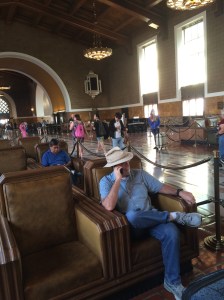
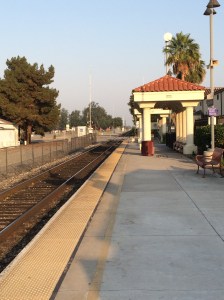 At Union Station, I indulged, buying a small bag of warm pretzels to go with a second cup of coffee. Since we had a sleeper car, we waited in the main lobby for a time but then removed to the special area where we would be transported by cart with our luggage to the train. Here is my husband, making sure his dad is doing well.
 Once settled on the train and when we were north of Los Angeles, we began to relax more than we had in a couple of weeks (hospital trips, errands, doctor calls). I became aware that the views from the sleeper car and the Pacific Parlour Car were offering me a sweep of moods. While I love the Central Coast of California, parts of it are hauntingly melancholy and lonely. I went from aching sadness to exuberant glee over and over again, depending on the view. The glimpses of the Pacific Ocean were the most valued moments, the pleasures afforded to the eyes and the soul.
 Once here with other family members in much cooler weather, we are noticing the moods of this area. Joyful, just energetic enough, beautiful, peaceful. Here is a photo of lovely downtown Gig Harbor, Washington.
 Our morning walk took us to the charming downtown area and the harbor.
 I also got a few rejections, but in the mix, an acceptance for a poem I was hoping an editor would like. And the two driving poems have now appeared in Vending Machine Press. (For some reason, the link doesn’t show up when I preview this entry, so here it is if you want to cut and paste it:
  I am also having some wonderful time with my amazing mother, also a writer and an genealogy aficionado. My bonus dad is always entertaining, and he and my husband love hanging out together.




 The weather, though, was a background spectacle. First, sunshine and clear skies. Then clouds collected to the north by the mountains, became dark. Chilly gusts of wind swept the leaves around on the patio now and then, ushering in a moderate rain for about fifteen minutes. After that, a rainbow, faint on one half of the arc, brighter on the other. Sharp rays coming through the darkening skies onto the ornamental pear trees, and then clear skies above the mountains just before twilight.
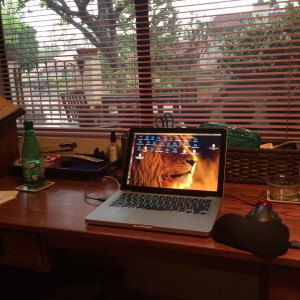
  I had a lot to do, so I settled into a comfortable pace. First task: open emails. Two rejections, one acceptance. Wait a minute. Really? Two poems out of four sent, and a request for recordings of both of them. Happy surprise! That called for a cup of hot tea with milk. Second task: send out more poems. That took almost all day. Each journal seems to want different things: no name on page, all information on first page, information on separate page, line count, word count, no bio, short first person bio, third person bio. It took some time to create all of the necessary documents, but I love working on that kind of a project. All the while surrounded by books.
 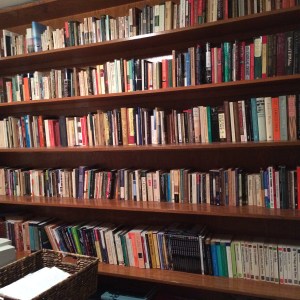 My eyes landed on a recent highly-valued gift from my amazing stepfather, Eric Peavy (we both hate the terms “stepdaughter” and “stepfather” but haven’t found replacement words yet). An artist and all around interesting person, he at one time illustrated an old copy of The Rubaiyat of Omar Khayyam that he had bought at a yard sale, and then hand-bound it. He first recited this passage to me when I was just sixteen years old:
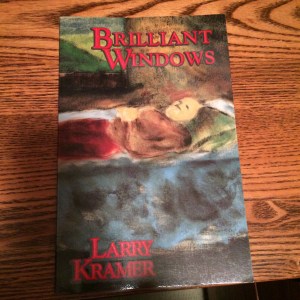
 I also spotted a book of poems by Larry Kramer, a mentor and teacher I had so many years ago, a lover of thrift-store browsing where “the things of the dead/for pennies are given away” (“Junk Store” p. 20). He is gone now, but I can hear his strong voice, almost frightening in its resonance, as soon as I open the book, called Brilliant Windows.
  On my desk, another highly prized gift from my friend, Stephanie, a strong supporter and encourager, the Fisher Space Pen. I love it.
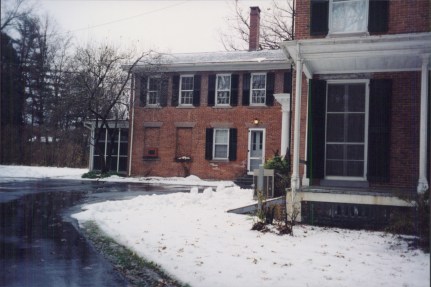
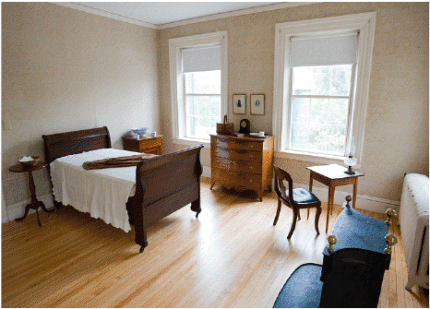 Photo taken from

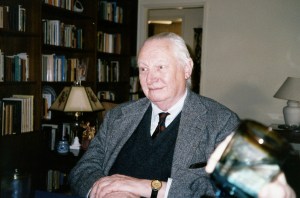 We never had a consensus about who actually started the group, but it was a toss up between Midge Sherwood, a mover and shaker who got the
  Joan Elizabeth White was a calm and delightful individual. We often had dinner together after a day of research at the library, waiting for the rush-hour traffic to subside. She lived in an apartment across the street from MacDonald’s, and I asked her once if she ate there occasionally. Her response: “Yes, almost every night. I really should reform.” After her car was stolen, for which we were all thankful, knowing she had become a less proficient driver as she aged, she took a taxi every day to the library.
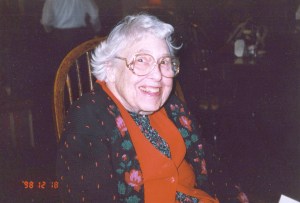 Kazuko Sugisaki spent half the year in the United States and the other half in Japan. She and Joan worked together for a time translating Japanese poetry and prose. Kazuko is a well known Anais Nin scholar and has written several
  Jeanne Nichols was a supremely engaging woman. Jeanne had taught English at Harbor College in Los Angeles, not too far from her lovely home on Mount Washington. Her book of poems,
  Her closest friend, Norma Almquist, was a warm, pleasant, and most interesting poet. Norma set out, early in life, to have as many different kinds of jobs as she could have. She was an airplane mechanic in the Women’s Marines, wrote field manuals for the Army’s Quartermaster Corps, edited a literary magazine, did social work, worked in factories, and taught English. After Jeanne’s children were grown, she and Norma traveled. We heard about their trip across the Nubian desert on camels, their island adventures, trips to India. Norma told me that she would get bored and hop a plane to Paris to sit on the Left Bank. A champion of light, humorous verse, Norma wrote a collection of it,

 For a time, I was the youngest member of the Live Poets, and I learned much from listening to them in conversation. What an honor to have known them all.
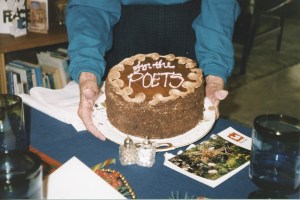
 It was 1991 when I first applied for a readership at the library in order to explore their treasury of Early American literature, which is extensive. The rare book collections offered a banquet of Puritan diaries, journals, conversion narratives, and sermons. My dissertation about the American Puritans would take me a couple of years to write, and after that was finished there was plenty of other research to be done in that and other areas of literature. For a person who likes reading, studying, and writing, The Huntington Library is a version of Paradise.
 Sometime in 1991, I discovered some poets and was invited to join their group. They had been meeting for a few years, and their habit was to get together once a month for lunch and a poetry reading. Each person read a poem out loud, and the others commented upon it. I had been in a number of writing classes in college, where every comma was questioned, every word evaluated. Not so with the Live Poets. We were enthusiastic about the poems, though they differed widely in terms of style and approach. We had rhymers and free-versers, didactic sensibilities, and freethinkers. We came out with our first chapbook in 2000, California Lyrics. In that one, we were celebrating the California Sesquicentennial, so all of the poems were about some aspect of the Golden State. Midge Sherwood, one of the original members of the group and an historian of California, wrote this tribute:


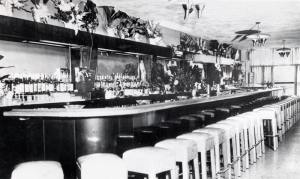

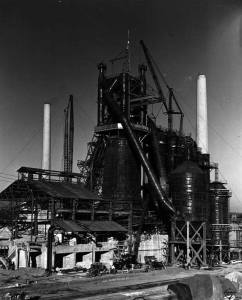 (Photo of Kaiser Steel Blast Furnace from Facebook Group, Fontana History and Culture)
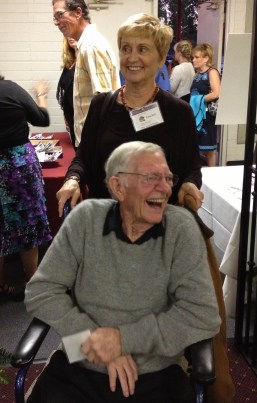 (Photo of Janyth Dison and Bobby Rowell from FOHI Reunion 2012 )
 There in the junkyard of dreams at what was then the only high school in town, Mr. Rowell introduced us to some of the great literature of the world. We read Crime and Punishment, The Stranger, The Metamorphosis, The Grapes of Wrath, To Kill a Mockingbird and other classics. We talked about the characters, their dilemmas, their anguish. We experimented with creative writing, coming up with poems and stories. I was heartened by his inimitable low-key style, his calm demeanor. He seemed ever ready to be amused by something, and his class was never one to dread or avoid. It was in his class that I became aware of writing as a life direction. In the sometimes callous and brutal experiences of high school, Bobby’s class provided a place to think, a place to develop a larger perspective. (Photo of chickens taken from Facebook Group, Fontana History and Culture)
 After a career in the Fontana Unified School District, first as a teacher and then as a counselor, he retired and, for a time, spent half the year in California, the other half at his home in Arkansas. My husband (also a past student of Bobby’s) and I visited him there in 2008 where we had a memorable day riding on his boat. At the edge of the lake, we watched some eagles in their nest, and in the early evening we had dinner on the porch overlooking the lake. Bobby also helped me to catch my first fish, a catfish.
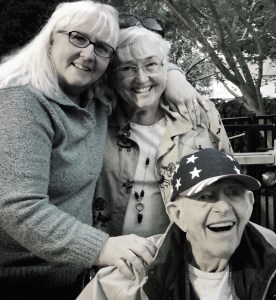 I was honored by his presence, someone who has known me since I was sixteen years old, and who first introduced me to some of the great poetry of the world.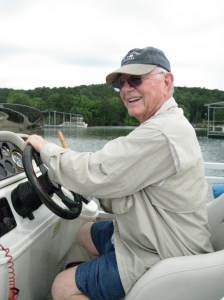


 (Photo of Charleston, S.C. from
  To say that he is an author that I “like” is understating my response to his books, but I wanted to avoid being sappy or overly-sentimental. I should point out that I had strong responses to his books, I LOVED his books, I was exhilarated by passages in his books, and I learned a lot about writing from his books. Rest in peace, Pat Conroy, and thank you for enhancing my appreciation for the reading experience, the writing experience, and for being a human being on earth at this time.
 Evidently we had met, though I was only nine months old. I have visited his grave many times, and tonight my mom gave me a browned page of one of his school assignments. It opens this way:



 I was an only child until I was almost twenty years old. Finally, I got a sibling when my mom and stepdad had my brother, Joel. Now an R & D Imagineer for Disney, he has always been creative. I will never forget the night we came home late one night after I picked him up from one of his college functions.
  We drove down the main street of what had been the small town in which we grew up. The streets were slick with rain, and it was after midnight. He began to recite poetry in the grand tradition of the Beats (Kerouac, Ginsberg, Ferlinghetti). He did it spontaneously and quickly. Mesmerized, I experienced the poem as it was being uttered. It was beautiful. Another Finn with the soul of a poet.
 Cold remedies and medications have prevented me from feeling clear, but I did have a few moments of recognizing what I need to do for the continuing path I am following. Perhaps the clearest moment was one of appreciating the beauty of a beach sunset.


 writingcustoms.com