
Wistful, melancholy, looking off into the distance. All I want, I tell my husband, is a clean surface in the middle of a clean world. I say this because while I abhor clutter, I often have much of it on the surfaces I use to write. My desk in the study, the dining room table, a wooden card table I sometimes set up just to be out in the living room. Piles of files. Mail. Envelopes. Photos. Labels. Folders. Books. Computer cords. Notebooks. The photos, especially, seem to have multiplied supernaturally. I was just looking for one or two, and now they are heaped upon the table like mounds of leaves.
I did find the one I was after. I took it while my mom and I were in Boston. We decided to visit Amherst to tour the home of Emily Dickinson (because who doesn’t like her?). We took the bus during a snowstorm, and when we got to Amherst, the town seemed hushed, like a scene on a Christmas card. Here is what the Dickinson property looked like that day.
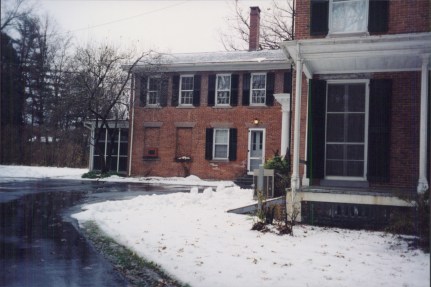
We were part of a small group touring the Dickinson grounds and home. I could almost believe in ghosts when we saw her bedroom with her small writing table where she wrote close to a thousand poems, only found by her sister, Lavinia, after Emily’s death.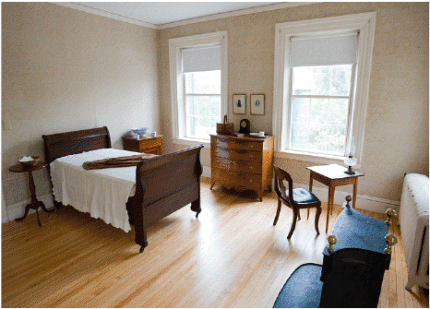 Photo taken from http://www.emilydickinsonmuseum.org
Back to the clean surface. The line comes from a favorite poem by Billy Collins, included in his collection, Sailing Alone Around the Room (2001). The poem is called, “Advice to Writers”:
Even if it keeps you up all night,
wash down the walls and scrub the floor
of your study before composing a syllable.
Clean the place as if the Pope were on his way.
Spotlessness is the niece of inspiration.
The more you clean, the more brilliant
your writing will be, so do not hesitate to take
to the open fields to scour the undersides
of rocks or swab in the dark forest
upper branches, nests full of eggs.
When you find your way back home
and stow the sponges and brushes under the sink,
you will behold in the light of dawn
the immaculate altar of your desk,
a clean surface in the middle of a clean world.
From a small vase, sparkling blue, lift
a yellow pencil, the sharpest of the bouquet,
and cover pages with tiny sentences
like long rows of devoted ants
that followed you in from the woods.
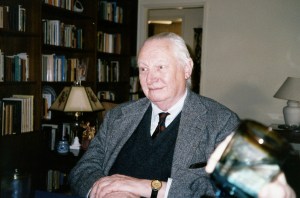
When I chatted with Billy Collins after his reading at Azusa Pacific University a few years back, I told him it was my favorite poem as he signed my book, and I think he understood my conflicts intuitively. My friend, Holle, another Collins fan, was with me, and here is a photo of them both.

It is National Poetry Month, the 20th anniversary celebration, started by The Academy of American Poets, and on their site you can find ways to join in. If you enjoy poetry, it might be fun to take a few moments and peruse their website, perhaps lingering over a poem or two by one of your favorite poets. I belong to the organization, and I enthusiastically support them for their efforts to permeate culture with poetry.
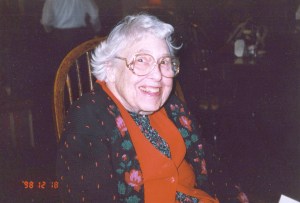
They suggest memorizing a poem. I must mention here our Aunt Pat, who at nearly ninety years old can recite many of the poems she memorized as a child. She recited Longfellow’s poem, “A Psalm of Life,” at the funeral of her sister (my husband’s mother) in December, as that poem was a family favorite. Their grandfather had been a “recitator” in the pubs of Ireland, an elocutionist, who read to them as they sat around the fire in the evenings, most often reading poetry, the Bible, or a Shakespeare play. Here is Aunt Pat, enjoying her vacation after reciting Robert W. Service’s poem, The Cremation of Sam McGee.

It is also the month of NaPoWriMo, in which participants write a poem a day. They were inspired by NaNoWriMo, where participants write a novel during the month of November every year. Lots of poets are contributing to NaPoWriMo, so if you are interested in reading their poems, visit the blogs of James Rovira and Jennifer Barricklow. Tim (a close friend) and I celebrated early, writing a poem a day in the month of February, although I only made it to day 7, and I think he has caught up in April with an additional dozen or so poems. I have to catch up to that by tomorrow morning when we meet to do Tai Chi and review the last week’s writing, and I can only get started at about 11 pm when we get home from seeing Dana Gioia, another poet, who is speaking tonight in Pasadena. So no time now to clean the surfaces.
 We never had a consensus about who actually started the group, but it was a toss up between Midge Sherwood, a mover and shaker who got the
  Joan Elizabeth White was a calm and delightful individual. We often had dinner together after a day of research at the library, waiting for the rush-hour traffic to subside. She lived in an apartment across the street from MacDonald’s, and I asked her once if she ate there occasionally. Her response: “Yes, almost every night. I really should reform.” After her car was stolen, for which we were all thankful, knowing she had become a less proficient driver as she aged, she took a taxi every day to the library.
 Kazuko Sugisaki spent half the year in the United States and the other half in Japan. She and Joan worked together for a time translating Japanese poetry and prose. Kazuko is a well known Anais Nin scholar and has written several
  Jeanne Nichols was a supremely engaging woman. Jeanne had taught English at Harbor College in Los Angeles, not too far from her lovely home on Mount Washington. Her book of poems,
  Her closest friend, Norma Almquist, was a warm, pleasant, and most interesting poet. Norma set out, early in life, to have as many different kinds of jobs as she could have. She was an airplane mechanic in the Women’s Marines, wrote field manuals for the Army’s Quartermaster Corps, edited a literary magazine, did social work, worked in factories, and taught English. After Jeanne’s children were grown, she and Norma traveled. We heard about their trip across the Nubian desert on camels, their island adventures, trips to India. Norma told me that she would get bored and hop a plane to Paris to sit on the Left Bank. A champion of light, humorous verse, Norma wrote a collection of it,

 For a time, I was the youngest member of the Live Poets, and I learned much from listening to them in conversation. What an honor to have known them all.
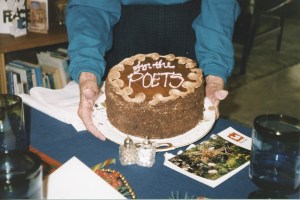
 It was 1991 when I first applied for a readership at the library in order to explore their treasury of Early American literature, which is extensive. The rare book collections offered a banquet of Puritan diaries, journals, conversion narratives, and sermons. My dissertation about the American Puritans would take me a couple of years to write, and after that was finished there was plenty of other research to be done in that and other areas of literature. For a person who likes reading, studying, and writing, The Huntington Library is a version of Paradise.
 Sometime in 1991, I discovered some poets and was invited to join their group. They had been meeting for a few years, and their habit was to get together once a month for lunch and a poetry reading. Each person read a poem out loud, and the others commented upon it. I had been in a number of writing classes in college, where every comma was questioned, every word evaluated. Not so with the Live Poets. We were enthusiastic about the poems, though they differed widely in terms of style and approach. We had rhymers and free-versers, didactic sensibilities, and freethinkers. We came out with our first chapbook in 2000, California Lyrics. In that one, we were celebrating the California Sesquicentennial, so all of the poems were about some aspect of the Golden State. Midge Sherwood, one of the original members of the group and an historian of California, wrote this tribute:


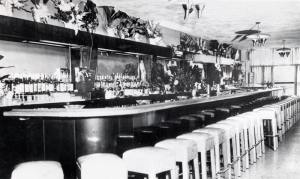

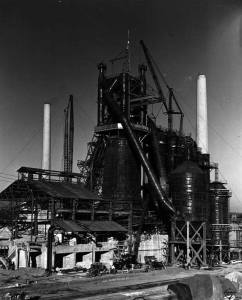 (Photo of Kaiser Steel Blast Furnace from Facebook Group, Fontana History and Culture)
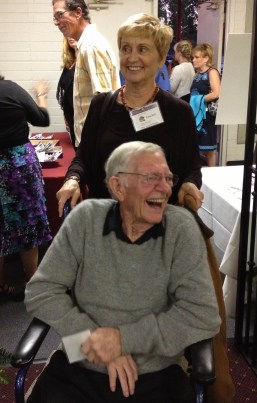 (Photo of Janyth Dison and Bobby Rowell from FOHI Reunion 2012 )
 There in the junkyard of dreams at what was then the only high school in town, Mr. Rowell introduced us to some of the great literature of the world. We read Crime and Punishment, The Stranger, The Metamorphosis, The Grapes of Wrath, To Kill a Mockingbird and other classics. We talked about the characters, their dilemmas, their anguish. We experimented with creative writing, coming up with poems and stories. I was heartened by his inimitable low-key style, his calm demeanor. He seemed ever ready to be amused by something, and his class was never one to dread or avoid. It was in his class that I became aware of writing as a life direction. In the sometimes callous and brutal experiences of high school, Bobby’s class provided a place to think, a place to develop a larger perspective. (Photo of chickens taken from Facebook Group, Fontana History and Culture)
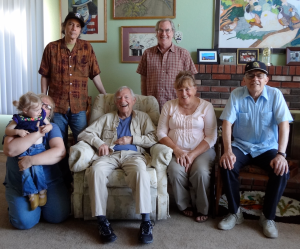 After a career in the Fontana Unified School District, first as a teacher and then as a counselor, he retired and, for a time, spent half the year in California, the other half at his home in Arkansas. My husband (also a past student of Bobby’s) and I visited him there in 2008 where we had a memorable day riding on his boat. At the edge of the lake, we watched some eagles in their nest, and in the early evening we had dinner on the porch overlooking the lake. Bobby also helped me to catch my first fish, a catfish.
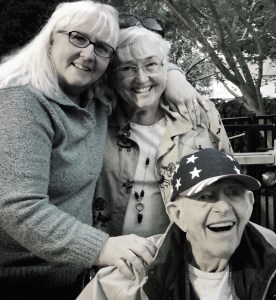 I was honored by his presence, someone who has known me since I was sixteen years old, and who first introduced me to some of the great poetry of the world.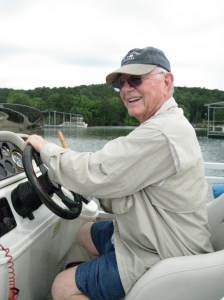


 (Photo of Charleston, S.C. from
  To say that he is an author that I “like” is understating my response to his books, but I wanted to avoid being sappy or overly-sentimental. I should point out that I had strong responses to his books, I LOVED his books, I was exhilarated by passages in his books, and I learned a lot about writing from his books. Rest in peace, Pat Conroy, and thank you for enhancing my appreciation for the reading experience, the writing experience, and for being a human being on earth at this time.
 Evidently we had met, though I was only nine months old. I have visited his grave many times, and tonight my mom gave me a browned page of one of his school assignments. It opens this way:


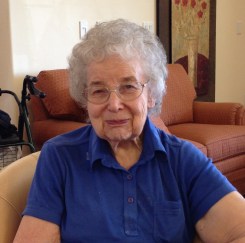

 I was an only child until I was almost twenty years old. Finally, I got a sibling when my mom and stepdad had my brother, Joel. Now an R & D Imagineer for Disney, he has always been creative. I will never forget the night we came home late one night after I picked him up from one of his college functions.
  We drove down the main street of what had been the small town in which we grew up. The streets were slick with rain, and it was after midnight. He began to recite poetry in the grand tradition of the Beats (Kerouac, Ginsberg, Ferlinghetti). He did it spontaneously and quickly. Mesmerized, I experienced the poem as it was being uttered. It was beautiful. Another Finn with the soul of a poet.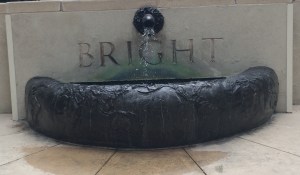
 Cold remedies and medications have prevented me from feeling clear, but I did have a few moments of recognizing what I need to do for the continuing path I am following. Perhaps the clearest moment was one of appreciating the beauty of a beach sunset.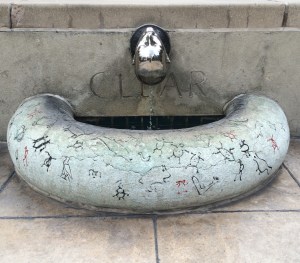


 Film crews have been setting up all day to film at 5th Street and Flower just beside the library, and I have enjoyed watching them unload huge lights, gigantic cord spirals, and other items I do not recognize. Amplifiers and generators? Storage containers? Electric tools? They have built a structure that looks like a portion of the street after an explosion, and now they are spreading around a black powder that will likely produce some special effects. We were told by the hotel staff that there will be shooting sounds and a car explosion at 10 p.m. tonight. With such a lively and interesting view, I am writing, contentedly settled at the desk in our room, where I will be for several more hours.
 I know many writers, poets, painters, and musicians, and as you would expect, they all have individual methods for their work, settings they like, environmental preferences. As Alexandra Enders noted in her article called “The Importance of Place: Where Writers Write and Why”:
 I am ultra-sensitive to the environment wherever I am. My long-suffering husband is the exact opposite. He can thrive and work almost anywhere, especially if he has a cup of coffee. My friends know that the ambiance in any given restaurant is supremely important, and it may take me a few minutes to select the right spot (away from bright light, chairs not too hard, tables not wobbly, tasteful décor, no brash TV noises, no traffic behind my chair). Thankfully, they usually allow me to select the space. My senses are so acute that loud noises can seem traumatic, bright light can feel like an assault, and the wrong person seated in the next booth or at the next table can ruin the day’s experience. At home, I can create the right environment, and when we are traveling or venturing out, I love it when an opportune setting is available. This desk at the Bonaventure is now a sacred spot, and as the sun and clouds shift and create new moods on the landscape, I am having a productive writing day.
 What is the setting in which you write? Are you particular or easygoing about your setting? Do you require certain accouterments? Whatever the case, we all seem to find our way through whatever impediments present themselves. Vive la différence!
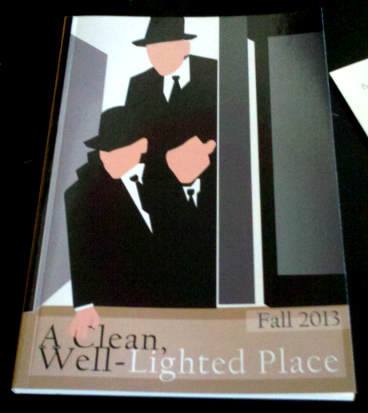
 writingcustoms.com